I Only See One Path
I am often asked, “Why do you always insist on taking the hard road?” I replied, “Why do you assume I see two roads?” Author Unknown.

I have been asked this question several times in my life. I know individuals mean well and are just trying to help. Most of the time, I believe it stems from a concerned attitude of empathy. Although, I often feel like I’m just one step away from failure. I’ve adopted the mantra, “Navigating Failure and Dreaming Big Dreams.” Yes, you can just refer to me as the “Failure Navigator.” I am the furthest thing from pragmatic. You might even describe me as delusional, overly idealistic, or impractical. I choose to believe I am an optimist, “Navigating Failure.” I understand I am impulsive. I tend to lack focus from time to time, leading to decisions that have led to a plethora of shortcomings. However, I am determined to cultivate the characteristics of loyalty, purpose, and courage. Protecting vulnerable and exploited children resonates within my soul. I know I am not a hero! I am a small cog in the wheel with a passion for bringing restoration and opportunities to children and youth. The daily disciplines of making wise decisions are crucial to the success of my mission. I choose to embrace difficult circumstances, but I also realize my decisions make life a little more challenging than it needs to be. My challenge to myself and anyone who cares to listen to me is to fully engage and accept the challenges that make a difference in the lives of others.
“Never let people who choose the path of least resistance steer you away from your chosen path of most resistance.” David Googins
“If you have men who will only come if they know there is a good road, I don’t want them. I want men who will come if there is no road at all.” David Livingstone
The faithfulness of John and Mary Williams is a tribute to their perseverance, their commitment to their calling, and their unwavering faith in a Holy and Living God. John was born in 1796 in London, England. He is remembered as one of the most persistent, determined, and faithful missionaries in the South Pacific.
In 1816, John and his wife, Mary, committed their lives to missionary work. Leaving behind friends, family, and the comforts of home. They set sail for the Society Islands in the South Pacific. Their initial endeavor on the island of Raiatea was an instant success. King Tamatoa, welcomed the couple to the island. He befriended them, gave them protection, and taught them how to live and survive in the tropics. John and Mary ministered throughout Raiatea for over five years. Their amazing work resulted in a congregation of over two thousand people. Hundreds were baptized, and many of those individuals dedicated their lives to helping the Williams spread the gospel.
The Williams’ began to extend their ministerial reach to other islands. Their success was not without trials and difficulties. The couple was stricken with malaria and other various tropical diseases. Sickness led to Mary losing several babies. John and Mary had a total of ten children; however, only three lived to be adults. John and Mary embarked upon their calling to make a difference in the Pacific Islands. It is estimated that there are over 30,000 islands. This would prove to be a daunting task for a missionary to forge new mission work. At the time, an estimated 15 million people were living throughout the 20 million square miles of ocean and islands. The islands were undoubtedly beautiful and offered a glimpse of paradise. However, the beauty was encompassed by infanticide, cannibalism, superstitious religious practices, and all forms of pagan idolatry. The enormous darkness of sin was only enhanced by the plethora of religions, customs, and languages that were common from island to island. It was by complete faithfulness to God that the Williams’ found success and the determination to press forward.
In 1833, John and Mary returned home to England for the first time in seventeen years. Huge crowds flocked to local churches to hear John speak and tell stories of his missionary adventures. He spoke of the cannibals of the South Pacific and how many of these individuals were giving up their idols and false religions to worship, serve, and follow the One True God. While in England, the Williams witnessed young men and women dedicating their lives to missionary service. During the five years that John and Mary were back home in England, John wrote a short description of the South Sea Islands. Thirty-eight thousand copies were sold. In 1838, John and Mary once again set sail for the South Pacific. A huge crowd of people came to say goodbye and wish them well. Because the mortality rate was so high throughout the islands, the Williams’ made an incredibly difficult decision to leave their six-year-old son, Samuel, in England. Tears streamed down the young Samuel’s face as he watched his parents embark upon another missionary adventure.
One year later, John felt led to branch out to the New Hebrides Islands with another evangelistic effort. These islands were known for fierce cannibalistic rituals. He left his wife, Mary, behind and set sail towards his destination. On November 20, 1839, John prepared to land on the island of Erromango. Earlier that morning he wrote these words on a slip of paper in his Bible. “I have prayed for thee, that thy faith fail not.” (The words of Jesus, to Simon Peter, found in Luke 22:32.) John approached the individuals on the island, however, he wasn’t welcome like many times before. This time he was brutally beaten with a club. It was a savage beating. Blow after blow, until John was dead. His corpse was dragged off to be cooked and eaten. A life of faithfulness and commitment to his Lord and Savior ended with an unceremonious ending. John’s crew watched the entire ordeal from the boat. The crew returned to share the news with Mary. She accepted John’s fate as “the plan of God.” Her sorrow never turned to bitterness as she remained faithful to her Lord.

“For my own part, I have never ceased to rejoice that God has appointed me to such an office. People talk of the sacrifice I have made in spending so much of my life in Africa. Is that a sacrifice which brings its own blest reward in healthful activity, the consciousness of doing good, peace of mind, and a bright hope of a glorious destiny hereafter? Away with the word sacrifice. Say rather it is a privilege. Anxiety, sickness, suffering, or danger, now and then, with a foregoing of the common conveniences and charities of this life, may make us pause, and cause the spirit to waver, and the soul to sink; but let this only be for a moment. All these are nothing when compared with the glory which shall be revealed in and for us. I never made a sacrifice.” David Livingstone
“The ‘Champions in the Field’ never truly sacrifice. It’s who they are and what they do. Champions never consider themselves heroes. They consistently move forward with unmitigated resilience. They have chosen their path, and nothing will deter them from attacking their purpose with an unbridled tenacity of courage.”
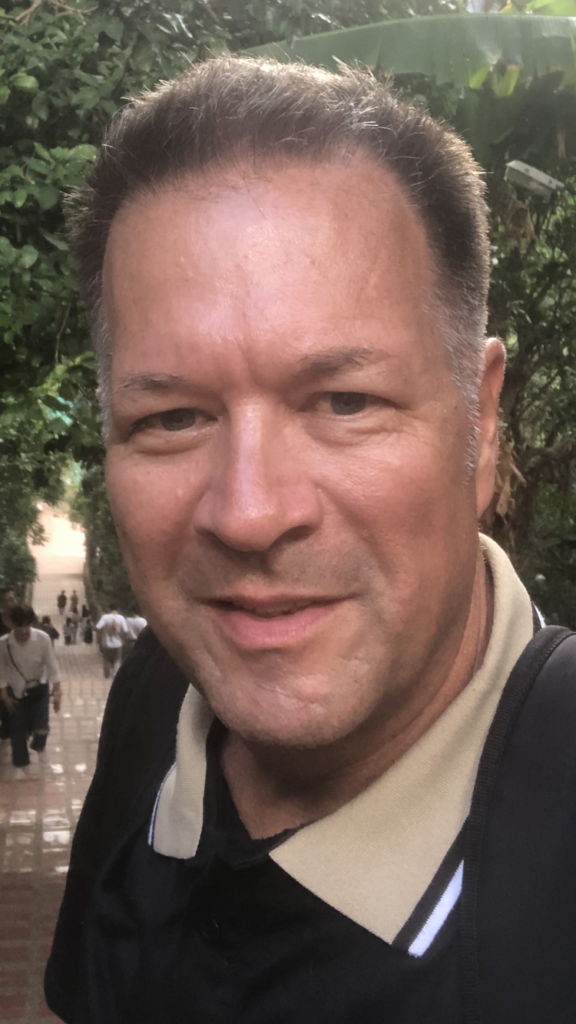
Rich Binning is a researcher, investigator, and freelance writer based in Southeast Asia. He supports missionaries in spreading the message of Jesus Christ and works towards ending child trafficking and sexual exploitation. Rich is well-educated in Biblical Studies, Historical Studies, and Political Science, which equips him to comprehend the intricacies of cross-cultural missions and anti-trafficking efforts. He applies his research and investigative skills to offer effective solutions to complex issues.
Become a monthly supporter or give a one-time gift to help Rich continue to serve vulnerable and exploited children in Southeast Asia. All Gifts are tax-deductible.
https://www.equipnet.org/missionaries/rbinning